 By Raghavendra Padmashali


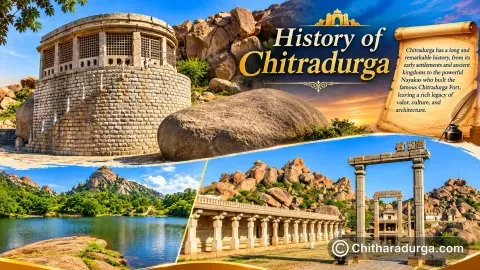
Chitradurga, one of Karnataka's most historically significant cities, is celebrated for its magnificent stone fortress, massive granite formations, legendary stories, and heroic traditions. Throughout different historical periods, the region has been associated with several names, including Hidimbapattana, Soolgallu, Bemmattanakallu, Chitrakaldurga, Chatrakaldurga, and Chitradurga. Some of these names originate from mythology and folklore, while others are documented in inscriptions and reflect the region's geographical features and political history.
Hidimbapattana: According to traditions associated with the Mahabharata, the demon Hidimbasura lived among the rocky hills of Chitradurga. During their exile, the Pandavas are believed to have visited this region, where Bhima fought and killed Hidimbasura. The legend also describes Bhima's marriage to Hidimbi, the sister of Hidimbasura. Because of these mythological associations, the region became known as Hidimbapattana, meaning the town associated with Hidimba. The Hidimbeshwara Temple within Chitradurga Fort preserves the region's connection with this ancient tradition.
Soolgallu (Sulgallu): Soolgallu is among the earliest historically documented names associated with Chitradurga. It appears in inscriptions dating to the Chalukya period. In old Kannada, words such as Sul or Sulavu can refer to curves, winding forms, or carved figures. Historians have suggested that the name may have described the region's unusual rock formations. Some interpretations also propose a linguistic connection between Soolgallu and the later name Chitrakallu, which eventually contributed to Chitrakaldurga.
Bemmattanakallu: During the Hoysala period, Chitradurga was known by names such as Bemmattanakallu and Bemmattanuru. These names appear in historical inscriptions associated with the region. Under Hoysala administration, the settlement developed into an important local centre and continued to hold significance during the early Vijayanagara period. Although the precise linguistic origin of Bemmattanakallu remains uncertain, the name represents an important stage in the medieval history of Chitradurga.
Chitrakaldurga and Chatrakaldurga: The name Chitrakaldurga became prominent during the Vijayanagara and Chitradurga Nayaka periods. It is generally interpreted as the fort of picturesque or extraordinary rocks, combining Chitra (picturesque or unusual), Kallu (stone), and Durga (fort). Another traditional name, Chatrakaldurga, is associated with an umbrella-shaped rock formation or hill near the town. The word Chatra means umbrella, suggesting a geographical origin for the name. However, historical evidence indicates that Chatrakaldurga was probably a later traditional form rather than the earliest recorded name.
Chitradurga: Over time, Chitrakaldurga gradually became shortened to Chitradurga, the name by which the city and district are known today. The name was already associated with the region during the Vijayanagara and Nayaka periods. Its massive granite hills, seven defensive enclosures, and imposing fortress earned it the popular titles Kallina Kote (Stone Fort) and Yelu Suttina Kote (Fort of Seven Enclosures). During British rule, the name was also written in the anglicised form Chitaldrug. Today, Chitradurga represents the region's remarkable historical legacy, courage, architectural achievements, and distinctive natural landscape.