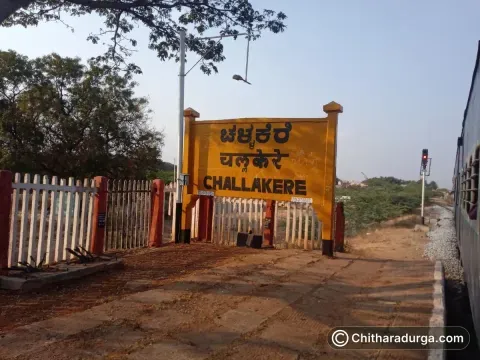
In the eastern part of Chitradurga district lies Challakere, a city and taluk that brings together history, traditional commerce, agriculture, education and modern scientific development. Once part of the historic landscape influenced by the Nayakas of Chitradurga, Challakere has steadily evolved into an important commercial centre and, more recently, a nationally significant hub for science, research and advanced technology.
Vani Vilas Sagar, popularly known as Mari Kanive, is one of the most important historic reservoirs and engineering landmarks of Karnataka. Located near Hiriyur in Chitradurga district, the reservoir is built across the Vedavathi River and has played an important role in the agricultural and social development of this drought-prone region.
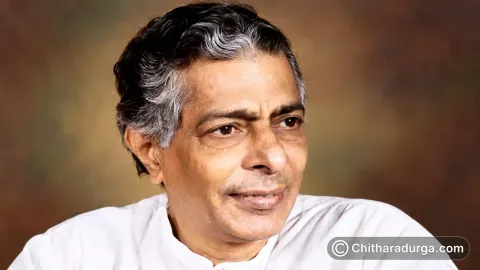
Taluku Ramaswamaiah Subba Rao (21 April 1920 – 10 April 1984), popularly known by his pen name Ta. Ra. Su. (ತ.ರಾ.ಸು.), occupies a distinguished place in modern Kannada literature. A novelist, short-story writer and literary figure, he became especially renowned for transforming the history of Chitradurga into compelling historical fiction.
Onake Obavva is one of the most celebrated women in the history and folklore of Karnataka. Closely associated with the magnificent Chitradurga Fort, she is remembered for her extraordinary courage in defending the fort against enemy soldiers with nothing more than an onake—a traditional wooden pestle used for pounding grain.
Sri Siddavanahalli Nijalingappa was a freedom fighter, lawyer, statesman and one of the most influential political leaders in the history of Karnataka. He played an important role in India’s freedom struggle, the movement for the unification of Kannada-speaking regions, the formation of the unified Mysore State, and the political development of Karnataka in the decades following Independence. He also served as a member of India’s Constituent Assembly and later
Rising dramatically among massive granite hills and boulders, Chitradurga Fort is one of Karnataka's most remarkable historical monuments. Popularly known as Kallina Kote—the Stone Fortress—and Yelu Suttina Kote—the Fort of Seven Circles—it represents centuries of military architecture, political history, engineering skill and legendary courage.