 By Raghavendra Padmashali


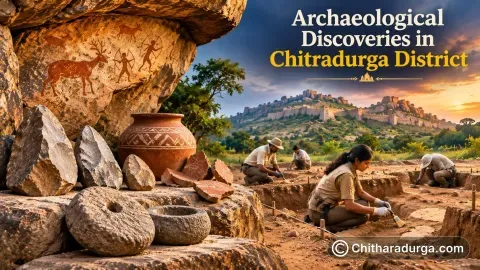
The history of Chitradurga district stretches far beyond the age of kings, kingdoms, and magnificent forts. Its earliest chapters belong to the Stone Age, when prehistoric communities inhabited the rocky landscapes, valleys, and river basins of this region. The district's granite hills, natural rock shelters, and availability of stone resources provided favourable conditions for early human settlement. Archaeological discoveries across Chitradurga reveal that the region played an important role in the prehistoric development of southern India, preserving valuable evidence of early human life, survival techniques, and cultural evolution.
During the Palaeolithic or Old Stone Age, early humans depended primarily on hunting, gathering wild fruits, roots, and other natural resources for survival. They used simple stone implements, including hand axes, cleavers, and cutting tools, for everyday activities. The river valleys and open landscapes of the Chitradurga region offered access to water, animals, and raw materials for toolmaking. These early communities gradually developed the skills necessary to adapt to their surroundings, laying the foundations for later human settlements.
The Mesolithic or Middle Stone Age witnessed further developments in human technology and lifestyle. Smaller and more refined stone tools, commonly known as microliths, became important for hunting and other activities. Prehistoric communities increasingly adapted their tools and survival strategies to changing environmental conditions. The rocky terrain and natural shelters of Chitradurga provide an important geographical setting for understanding these developments and the gradual transition from mobile hunting-and-gathering communities towards more settled ways of life.
The Neolithic or New Stone Age marked a significant turning point in the prehistoric history of Chitradurga. Communities began adopting agriculture, animal domestication, pottery-making, and more permanent settlements. The archaeological site of Brahmagiri, in Molakalmuru taluk, provides remarkable evidence of this period. Excavations conducted by archaeologists, including Mortimer Wheeler in 1947, revealed polished stone axes, handmade pottery, stone blades, and traces of ancient habitation. Archaeological investigations identified successive cultural phases, including the Neolithic, Megalithic, and Early Historic periods, demonstrating the region's long history of human occupation.
Another important prehistoric location is Chandravalli, situated near Chitradurga Fort. Discoveries of Neolithic stone implements in and around the valley, particularly near Baralagondi and Neralagondi, indicate human activity long before the emergence of historical kingdoms. Together, Brahmagiri and Chandravalli offer valuable insights into the technological progress, settlement patterns, and cultural traditions of ancient communities. These archaeological treasures establish Chitradurga as an important centre for understanding Karnataka's prehistoric heritage. Preserving these sites is essential for protecting the district's earliest history and passing its remarkable legacy to future generations.