 By Raghavendra Padmashali
The Weavers of Molakalmuru and Their Silk Sarees
Threads of Tradition, Skill and Heritage
In the northern part of Chitradurga district lies Molakalmuru, a town whose identity is closely woven with silk, craftsmanship and generations of traditional knowledge. Beyond its landscape and history, Molakalmuru has earned recognition for one of Karnataka’s treasured handloom traditions — the Molakalmuru silk saree.
These sarees are more than garments. They represent the patience of the weaver, the artistic imagination of artisan families and a cultural tradition passed from one generation to another.
A Town Woven with Silk
For generations, weaving has been an important livelihood for artisan families in and around Molakalmuru. Skills are traditionally learned within families, with knowledge of yarn, colour combinations, designs and loom techniques being handed down through experience.
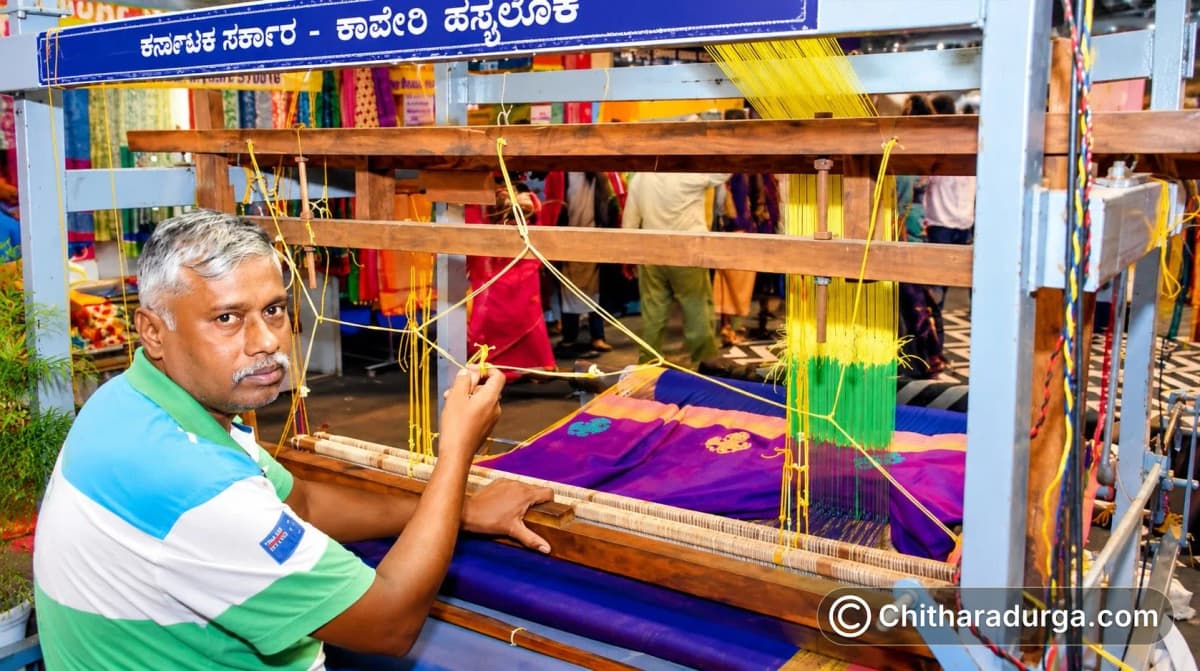
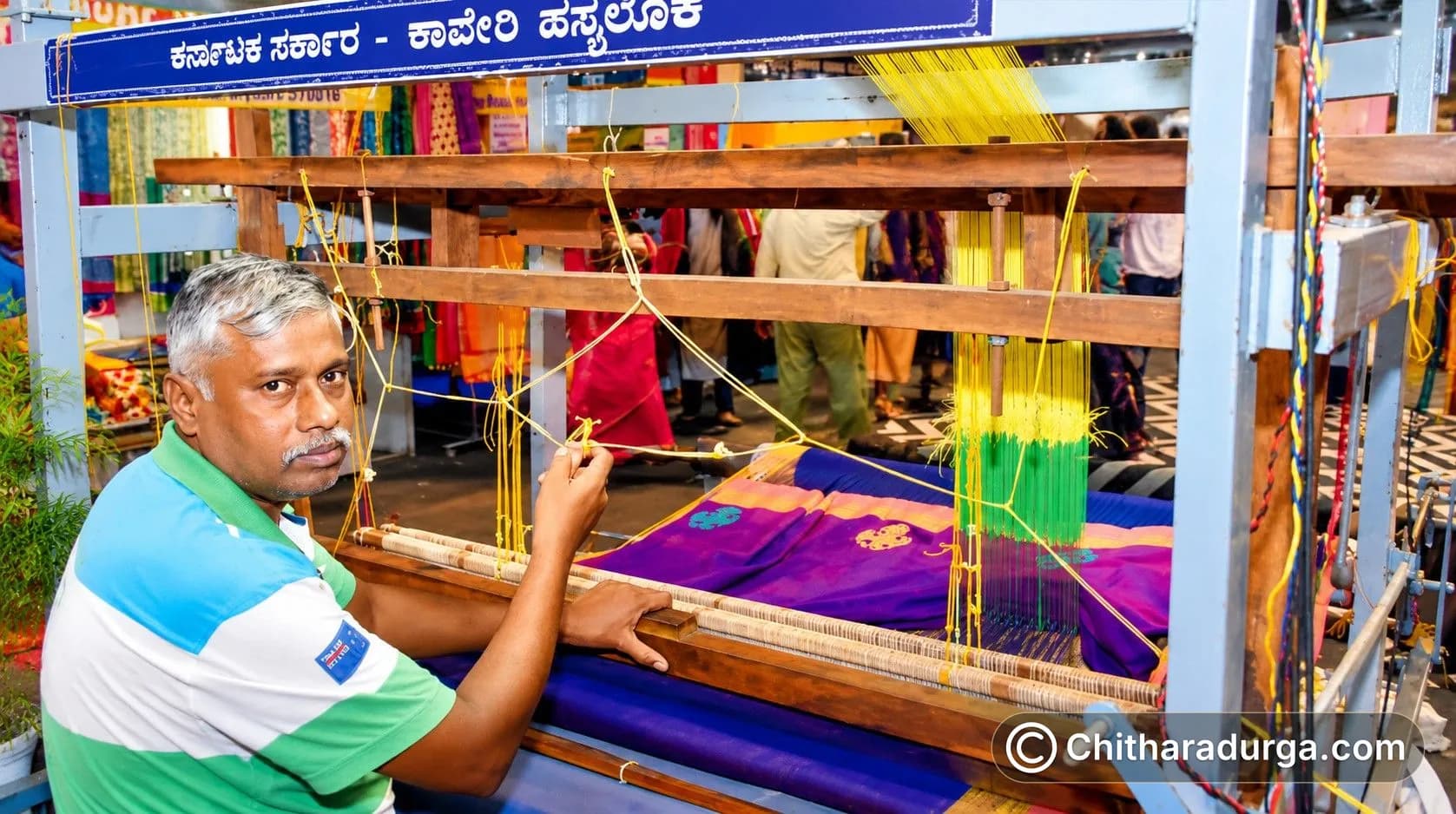
Inside a weaver’s home or workshop, the rhythmic movement of the handloom transforms fine threads into an elegant saree. What appears effortless in the finished fabric is actually the result of careful preparation, concentration and many hours of skilled work.
Every stage requires precision — preparing the yarn, arranging the warp and weft, selecting colours, creating borders and motifs, and finally weaving them together.
The Beauty of Molakalmuru Silk Sarees
Molakalmuru sarees are admired for their rich silk texture, striking colour combinations, distinctive borders and traditional designs. Their visual character reflects the aesthetics of Karnataka’s handloom heritage.
Traditional motifs and patterns often draw inspiration from nature, local artistic traditions and familiar cultural forms. Contrasting colours between the body, border and pallu give many Molakalmuru sarees their impressive appearance.
A beautifully woven saree is therefore not simply a piece of cloth. It is a work of art created thread by thread.
The Hands Behind the Saree
The true strength of the Molakalmuru saree tradition lies with its weavers.
Behind every finished saree are countless movements of skilled hands. The artisan must maintain consistency in tension, pattern, alignment and colour throughout the weaving process. Even a small mistake can affect the appearance of the final saree.
This makes handloom weaving very different from mass-produced fabric. Each handwoven saree carries the touch, judgement and skill of the individual artisan who created it.
For many families, weaving is also an inheritance. Children grow up watching parents and grandparents work at the loom, gradually understanding a craft that cannot be learned from books alone.
Women and the Weaving Tradition
Women have also played an important role in sustaining weaving households. Their contribution may extend across several stages associated with preparing yarn, colours, finishing and managing family-based production.
Thus, the story of Molakalmuru silk is also the story of families working together to preserve a traditional livelihood.
Tradition in a Changing World
Handloom communities today face significant challenges. Changing fashion preferences, competition from power looms and machine-made textiles, rising production costs and the difficulty of attracting younger generations to labour-intensive weaving can put traditional crafts under pressure.
A genuine handwoven saree requires time and skill. Its value cannot be measured only by comparing its price with a machine-produced alternative.
When people choose authentic handloom products, they are not merely purchasing clothing. They are supporting artisans, preserving traditional knowledge and helping a cultural heritage survive.
Molakalmuru's Identity and Pride
The Molakalmuru silk saree occupies a special place in the cultural identity of the region. It connects the past with the present and carries the craftsmanship of Chitradurga district far beyond its place of origin.
At weddings, festivals, religious ceremonies and important family occasions, silk sarees continue to hold emotional and cultural significance. A Molakalmuru saree worn on such an occasion becomes part of personal memories while also carrying the story of the artisan who created it.
Preserving the Loom for the Future
Protecting this tradition requires more than admiration. Skilled weavers need sustainable livelihoods, fair recognition for their work, access to wider markets and encouragement for younger artisans to continue the craft.
Digital platforms and responsible promotion can introduce Molakalmuru sarees to new generations and customers across India and beyond. At the same time, awareness about authentic handloom craftsmanship can help buyers appreciate the effort behind every saree.
The sound of a handloom in Molakalmuru is therefore more than the sound of production. It is the rhythm of a living heritage.
As long as those looms continue to move, the stories, skills and traditions of generations of Molakalmuru weavers will continue to be woven into silk.
Molakalmuru silk is not merely worn — it carries a heritage woven by hand.